Typical scenarios
Typical water heater problems we are called for
Water heaters usually fail in one of a few familiar ways. If yours looks like one of these, the cause is usually the same, and so is the decision you will face.
No hot water at all in the morning
This is the call that usually comes first thing in the morning. The causes are usually simple: a pilot light that has gone out on a gas unit, a tripped breaker or a failed heating element on an electric unit, or a thermostat that has stopped calling for heat. The diagnostic assessment finds which one it is, and most of these are repairs, not replacements. The visit starts with the safety check and the diagnostic, so the fix matches the actual fault.
Water that runs hot, then cold, then hot again
Hot water that will not stay hot usually means a component is failing rather than the whole unit. On an electric heater it is often one of the two heating elements; on a gas heater it can be the thermostat or the burner. A household that has grown, or a unit that is too small for the home, can also cause the same symptom, and that is worth knowing before you spend money on a repair. The diagnosis covers both the parts and the size of the unit, so the advice is honest either way.
Rumbling, popping or rusty water
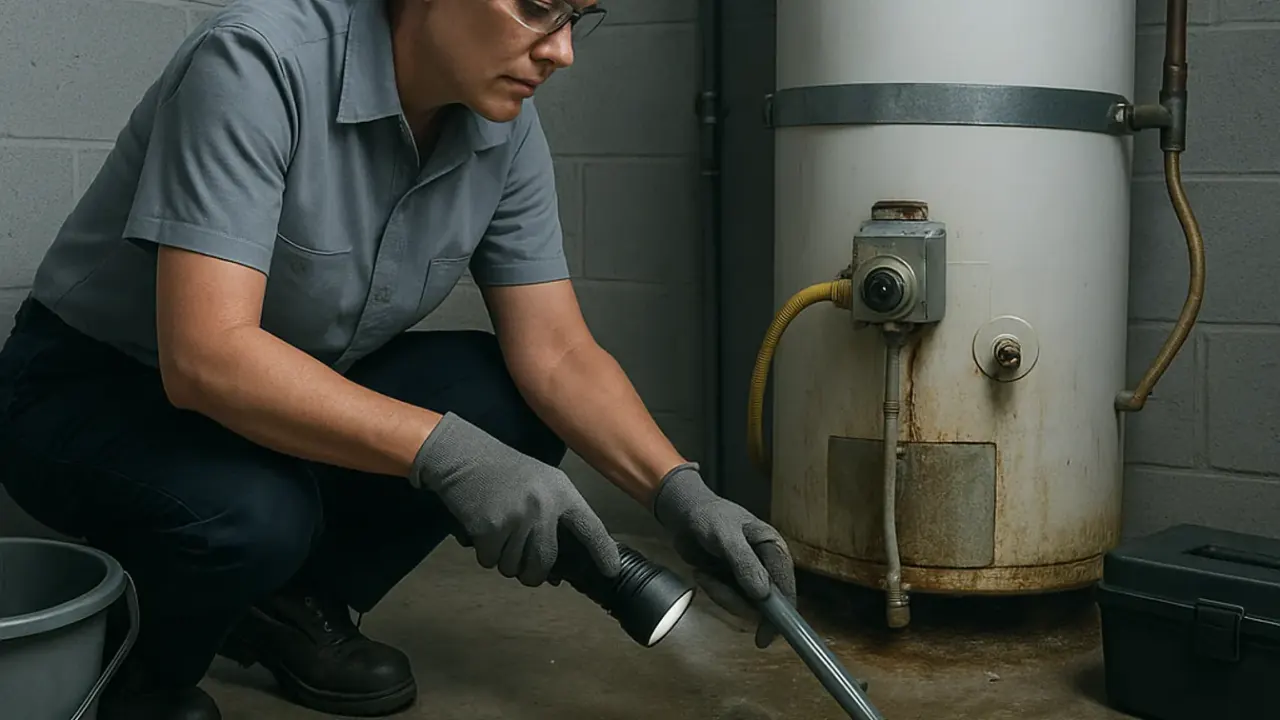
Rumbling or popping noises from a water heater usually mean sediment has built up inside the tank. The sediment sits on the bottom, the burner or element heats it, and it rumbles. Rusty or discoloured hot water usually means corrosion inside the tank. Sediment can be flushed out; a corroded tank cannot be repaired, and a leak at the base usually follows. This is the scenario where the repair-or-replace decision matters most, and the diagnostic assessment is what makes it a decision based on facts rather than a guess.